


As a runner, you’re likely aware of the importance of good running shoes. But did you know running socks are equally vital for peak performance and foot health? You have probably asked yourself “Are running socks worth it?” and “Why are running socks so expensive?”. This comprehensive guide answers both, delving into the often overlooked world of running socks and the research behind them.
Imagine Sarah, an enthusiastic weekend runner who’s gearing up for her first half marathon. Every weekend, she laces up her trusted running shoes and hits the trail, aiming to beat her personal best.
However, despite investing in top-notch shoes, she often finds herself grappling with blisters and discomfort, not realising that her regular cotton socks are the culprits.
This is where running socks become the game changer. Designed specifically for runners like Sarah, these socks are more than just a layer of fabric; they’re a crucial tool for enhancing performance and ensuring foot health. In this article, we’ll dive into why running socks are essential for every runner, whether you’re a weekend warrior like Sarah or a seasoned marathoner.
Understanding the Importance of Running Socks

Running socks are more than just a layer between your foot and shoe. They play a pivotal role in comfort, performance, and injury prevention. High-quality running socks offer seamless designs to prevent blisters, arch support for stability, and moisture-wicking materials to keep feet dry and comfortable.
And foot problems are far from rare. A review in the British Journal of Sports Medicine looked at skin injuries reported on marathon day and found blisters and other friction injuries were the most common, affecting up to 39% of runners in some races.
Technical Advantages Over Regular Socks
Unlike regular socks, believe it or not, running socks are designed with the runner in mind. They often feature specialised padding in high-impact areas, have dedicated mesh zones for breathability, and have much more supportive fits that reduce slipping and bunching inside the shoe.
Depending on the type of running socks you get, some even come with multiple ultra-thin layers which take away the direct skin-to-material friction that can create blisters. Some running socks can be waterproof, and some have specific compression areas, such as under the arch, which can help prevent and relieve issues such as plantar fasciitis.
Regular socks offer nothing in the way of support, durability, cushioning or technology… because they aren’t made for running.
So why are running socks more expensive? Because the construction is where the benefit comes from. Podiatrists Herring and Richie, whose well-known blister study we cover below, ran a follow-up test and found the advantage of synthetic fibres only appeared when the sock had proper padding shaped to the foot. Knit the same fibres into a basic cushioned sock and the difference disappeared. With a quality running sock, you’re paying for that engineering, not just the yarn.
Material Matters: Why the Right Fabric is Crucial
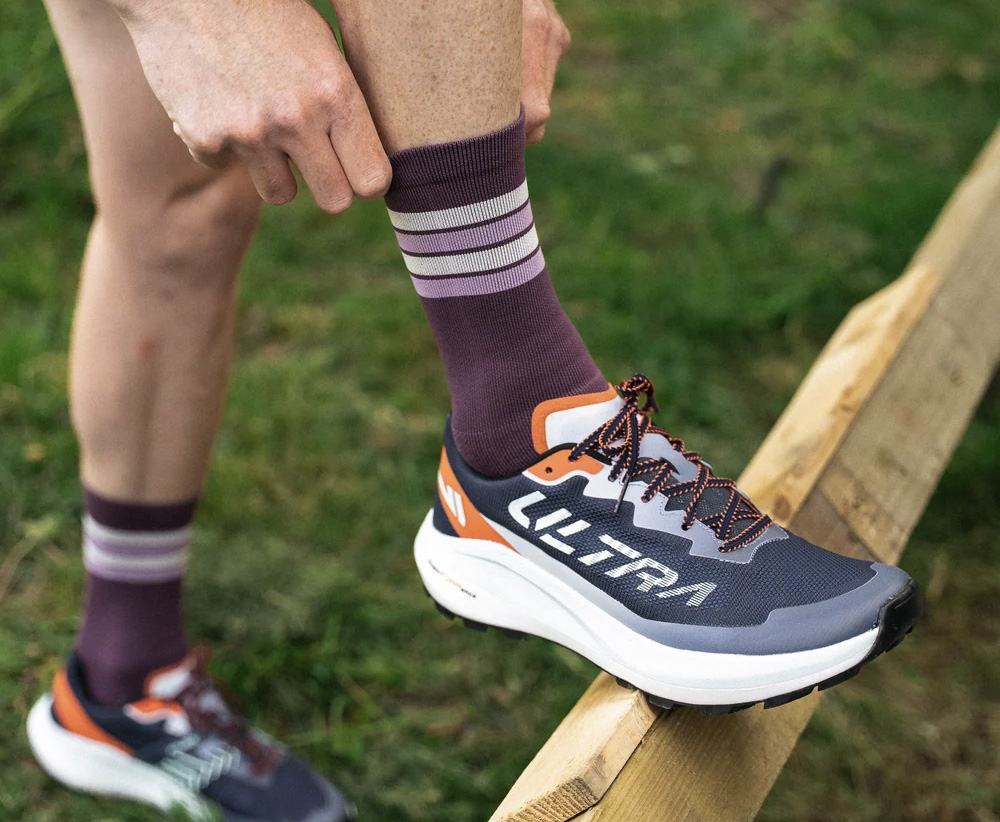
The material of your running socks can make a significant difference. Synthetic fibres like polyester, nylon, and elastane are popular choices for their ability to wick moisture and maintain shape. Some running socks also incorporate natural materials like merino wool for temperature regulation.
The research backs this up. In a double-blind study of 35 long-distance runners, published in the Journal of the American Podiatric Medical Association, runners in cotton socks got twice as many blisters as those in otherwise identical synthetic socks, and their blisters were three times bigger.
Cotton is the problem fibre. It holds around three times as much moisture as acrylic, and once it’s wet it stretches and loses its shape, which is exactly what makes socks bunch and wrinkle inside your shoe. That was Sarah’s problem all along.
Specialised Features for Different Needs

Running socks come in various styles, each addressing different needs:
- Thin vs. Thick: Thinner socks are lighter and cooler, ideal for warm weather. Thicker socks offer more cushioning and warmth, suitable for colder conditions.
- Compression: Compression socks can improve circulation and reduce fatigue. Alongside those benefits, compression can help alleviate running injuries and help your legs and feet recover faster. Research has found that runners who wear compression after hard sessions report less muscle soreness and regain their strength more quickly, which is why so many runners pull on a pair after a long run or race.
- Low-cut, Quarter, and Crew: The length of your socks can affect comfort and protection. Low-cut socks are minimalistic, while crew socks offer more coverage.
Blister Prevention: A Key Benefit
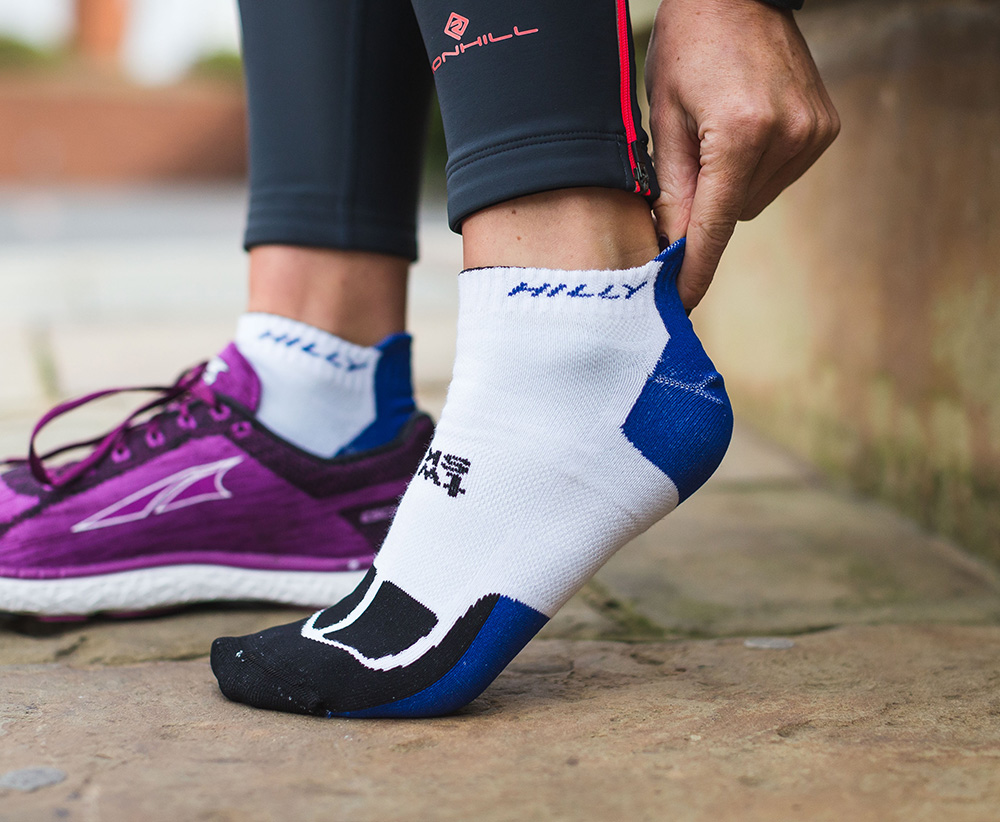
One of the most appreciated features of running socks is blister prevention. Seamless designs and moisture-wicking fabrics reduce friction and keep feet dry, significantly lowering the risk of blisters.
Keeping your feet dry matters more than you might think. A 2022 study of 203 long-distance hikers found that finishing the day in wet socks almost doubled the risk of blisters. If you’re training for a marathon or an ultra, a moisture-wicking pair (plus a spare for the longest days) is one of the simplest ways to protect your feet.
If blisters are something that bother you regularly, running socks with double layers (skins) allow movement to occur between the layers instead of against your skin. Amazing, right?
Men’s and Women’s Running Socks: Understanding the Differences
Men’s and women’s feet have different shapes and sizes, and so do their socks. Running socks designed for women typically offer a narrower heel and a slimmer profile to better fit a woman’s foot.
The Role of Running Socks in Enhancing Performance
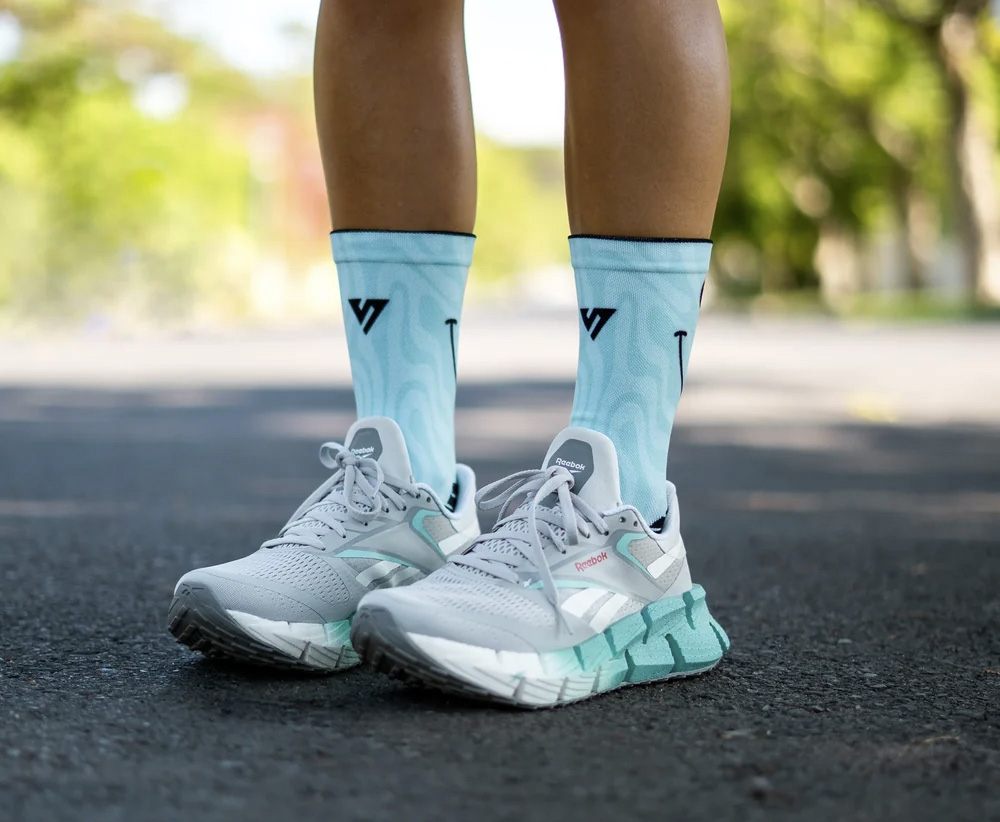
Running socks are not just an accessory but a vital component in a runner’s arsenal, significantly enhancing performance. They are engineered to provide targeted support, reduce friction, and manage moisture, all of which contribute to a more comfortable and efficient running experience.
Quality running socks can prevent blisters, offer cushioning where it’s needed most, and help maintain optimal foot temperature, allowing runners to focus on their stride and endurance. By improving overall foot comfort, these specialised socks enable runners to push their limits without being held back by foot discomfort or injury risks.
Long-Term Foot Health and Running Socks
The benefits of running socks extend beyond immediate comfort.
Think of your running socks as the guardians of your foot health. Over time, they play a critical role in keeping your feet in top shape. With the right pair of running socks, you’re not just getting a comfy hug for your feet; you’re also ensuring they’re well protected against the common woes runners face.
From preventing blisters to offering arch support, these socks work tirelessly to keep your feet healthy, letting you hit the pavement or trail day after day without worrying about foot ailments. It’s a long-term relationship between your feet and your socks, where care, comfort, and health go hand in hand.
Choosing the Right Running Socks for You
When selecting running socks, consider:
- Fit: They should be snug but not too tight.
- Cushioning: Depends on personal preference and the type of running.
- Breathability: Crucial for temperature regulation and moisture management.
- Durability: Look for socks that can withstand frequent use and washing.
Tips for Caring for Your Running Socks
To prolong the life of your running socks:
- Follow washing instructions carefully.
- Avoid bleach and fabric softeners.
- Dry them correctly. We always recommend air drying, since tumble drying can cause issues with elastics.
Conclusion
In conclusion, running socks are a vital component of a runner’s gear. They offer more than just comfort; they enhance performance, prevent injuries, and contribute to long-term foot health. When choosing running socks, consider your specific needs and preferences, and don’t underestimate the impact of this seemingly small piece of gear on your running experience. For runners like Sarah, swapping cotton for a proper running sock is one of the easiest upgrades to make before race day.
Remember, your feet carry you through every mile. Give them the care and support they deserve with the right pair of running socks.
Take a look at our full range of running socks. We stock a wide range of leading brands such as Hilly, Balega and Versus. If you can’t decide what is right for you, leave a comment or contact us for some friendly advice.
