


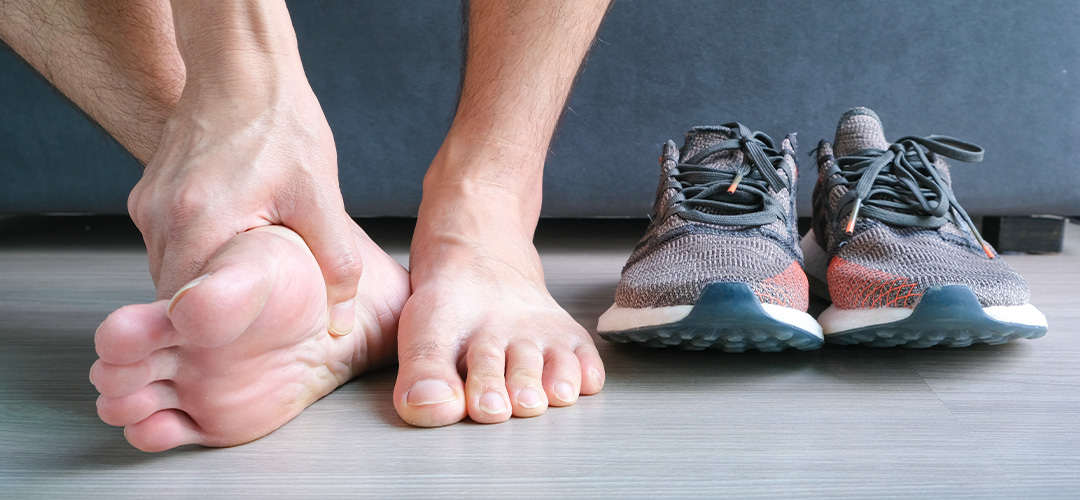
That sharp pain beneath your heel when you take your first steps in the morning is one of the most recognisable signs of plantar fasciitis. It may ease once you begin moving, only to return after a run, a long walk or several hours spent standing.
Despite often being called “runner’s heel”, plantar fasciitis is not limited to runners. It can affect walkers, gym-goers and simply anyone who has been on their feet.
The challenge is that there is rarely one simple cause. Training load, foot and ankle mobility, strength, footwear and the way you move may all influence the stress placed on the plantar fascia.
Understanding that wider picture can be more useful than searching for one exercise, shoe or insole that promises a quick fix.
What is plantar fasciitis?

The plantar fascia is a strong band of connective tissue running from the heel towards the toes. It helps support the arch and manage force as you stand, walk and run.
Each time your foot takes your weight, the plantar fascia is placed under tension. This is normal. Pain can develop when repeated demand exceeds the tissue’s current capacity to recover and adapt.
Although the name ends in “-itis”, persistent plantar fasciitis is not always a straightforward inflammatory problem. Research more commonly describes degenerative irritation, collagen disruption and small tissue changes around the fascia’s attachment to the heel.
As the clinical reference StatPearls explains: “The cause of plantar fasciitis is multifactorial, but most cases result from overuse stress.”
This is an important point: plantar fasciitis is rarely explained by one “bad” movement or one unsuitable pair of shoes.
What does plantar fasciitis feel like?
The most common symptom is pain beneath the heel, often towards its inner edge. It may also extend forwards into the arch.
Typical signs include:
- Pain during the first few steps after getting out of bed
- Pain when standing after sitting or resting
- Tenderness underneath or slightly inside the heel
- Discomfort after running, walking or prolonged standing
- Pain that initially eases with movement but returns later
- Increased discomfort when walking barefoot on hard floors
Heel pain is not always plantar fasciitis. Achilles tendon problems, heel-pad irritation, stress injuries and nerve-related conditions can produce pain in a similar area.
Our guide to Achilles tendinopathy may help explain the difference between pain underneath the heel and pain at the back of it.
Severe, persistent or unexplained heel pain should be assessed by an appropriate healthcare professional.
How common is plantar fasciitis?
Plantar fasciitis is one of the most common causes of heel pain. Estimates suggest that it affects around one in ten people and accounts for approximately 10% of running-related injuries.
Training volume may be one part of the picture. A one-year prospective study followed 1,206 runners and non-runners and recorded 28 new cases of plantar fasciitis.
Runners covering more than 40 kilometres per week had around six times the odds of developing plantar fasciitis compared with those running between 6 and 20 kilometres per week.
That does not make 40 kilometres a universal danger point. Every runner has a different training history and capacity, and the study recorded relatively few cases. It does, however, highlight the importance of building training gradually and allowing enough time for recovery.
What causes plantar fasciitis?
There is rarely one cause that applies to everyone. The following factors are better viewed as possible contributors rather than guaranteed causes.
Sudden changes in activity
A rapid increase in activity can place more demand on the plantar fascia than it is ready to manage. Examples include:
- Increasing running mileage or frequency
- Adding hills or speed sessions
- Starting Couch to 5K
- Returning to exercise after a break
- Beginning a walking challenge
- Adding more jumping, circuits or treadmill sessions
- Changing to a job involving more standing
- Walking much further than usual on holiday
The activity itself is not necessarily the problem. The issue is often the speed at which the load changes.
New runners may also find our guide to Couch to 5K injuries and niggles useful.
Calf tightness and limited ankle movement

The calf, Achilles tendon and plantar fascia work as part of the same movement chain.
Limited ankle dorsiflexion, the movement that allows the knee to travel forwards over the foot, can change the way the lower leg and foot manage each step.
Tightness in the calf and Achilles region is commonly seen in people with plantar fasciitis, although it should not be assumed to be the sole cause.
Foot strength and load tolerance
The smaller muscles within the foot help control the arch and manage load.
A small study compared 10 experienced runners with chronic plantar fasciitis against 10 unaffected runners. It found significantly lower rearfoot intrinsic-muscle volume in the symptomatic group.
Because the research involved only 20 people, it cannot prove that reduced muscle volume caused plantar fasciitis. It does, however, support looking at foot strength and tissue capacity as part of the wider picture.
Foot shape and biomechanics
Both high and low arches have been associated with plantar heel pain, but foot shape alone does not predict who will develop symptoms.
Possible factors include:
- Differences between the left and right foot
- Limited movement through the ankle or big toe
- How pressure travels from heel to forefoot
- How quickly and for how long the foot pronates
- Foot, knee and lower-leg alignment
- Changes in stride caused by pain
Pronation is a normal movement that helps the foot absorb force and adapt to the ground. Some inward movement does not automatically mean anything is wrong.
What matters is how the whole body moves, whether the movement is comfortable and how it interacts with activity and footwear.
Footwear and fit

There is no universal “best shoe for plantar fasciitis”. Foot shape, activity, comfort and individual movement all matter.
Footwear may contribute when it is poorly fitted, badly worn or unsuitable for the activity. Relevant features can include cushioning, width, heel security, stiffness, heel-to-toe drop and the amount of structure within the shoe.
A sudden change to a very different type of footwear may also alter the demand placed on the foot and calf. This does not make one footwear category inherently bad; it means transitions should be considered carefully.
Read more about why professional shoe fitting matters and how long running shoes last.
Plantar fasciitis is not only a running injury
Runners experience repeated loading through the foot, particularly when mileage, speed or hills increase. However, walkers and non-runners can experience the same mismatch between load and capacity.
Long walks, uneven terrain and prolonged standing can all increase the total demand placed on the feet. Gym classes, skipping, circuits and treadmill sessions may also introduce more impact than the body is accustomed to.
People working in retail, healthcare, hospitality, teaching or warehousing may spend most of the day standing. A new job, holiday or dog-walking routine can therefore increase foot load substantially, even when the person does not consider themselves sporty.
Prolonged standing and weight-bearing occupations are recognised as potential risk factors for plantar fasciitis.
Could your gait be contributing?
Gait describes the way you walk or run. An assessment can examine how your feet contact the ground, where pressure is concentrated and how the ankles, knees and lower limbs move.
One pressure-based gait study found measurable differences between people with plantar fasciitis and pain-free participants. The researchers concluded:
“Various biomechanical differences exist between healthy subjects and those with PF.”
However, a difference is not automatically the cause of the pain. Plantar fasciitis itself can change gait, causing someone to shorten their stride, shift weight towards the other foot or avoid loading the painful heel.
The purpose of gait analysis should therefore not be to find one “wrong” movement. It is to build a clearer individual picture, including:
- Left-to-right differences
- Pressure beneath the heel, arch and forefoot
- Ankle range of movement
- Foot strike and pronation
- Knee tracking and lower-limb alignment
- Shoe wear and fit
- Whether alternative footwear changes comfort
How can gait analysis help?

A retail gait analysis cannot diagnose plantar fasciitis or replace a medical assessment. It can, however, provide useful information about movement, foot shape, pressure distribution and footwear.
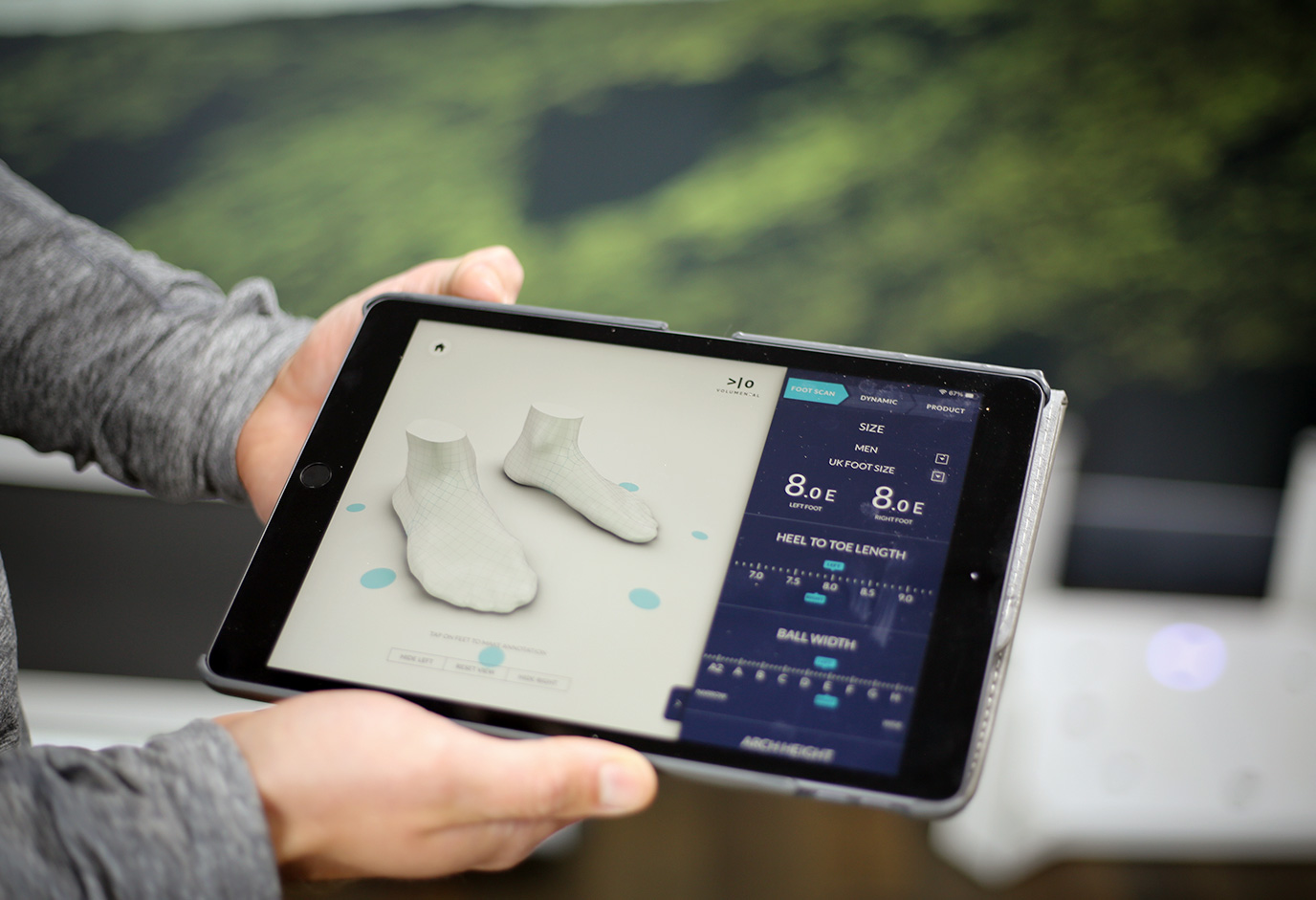
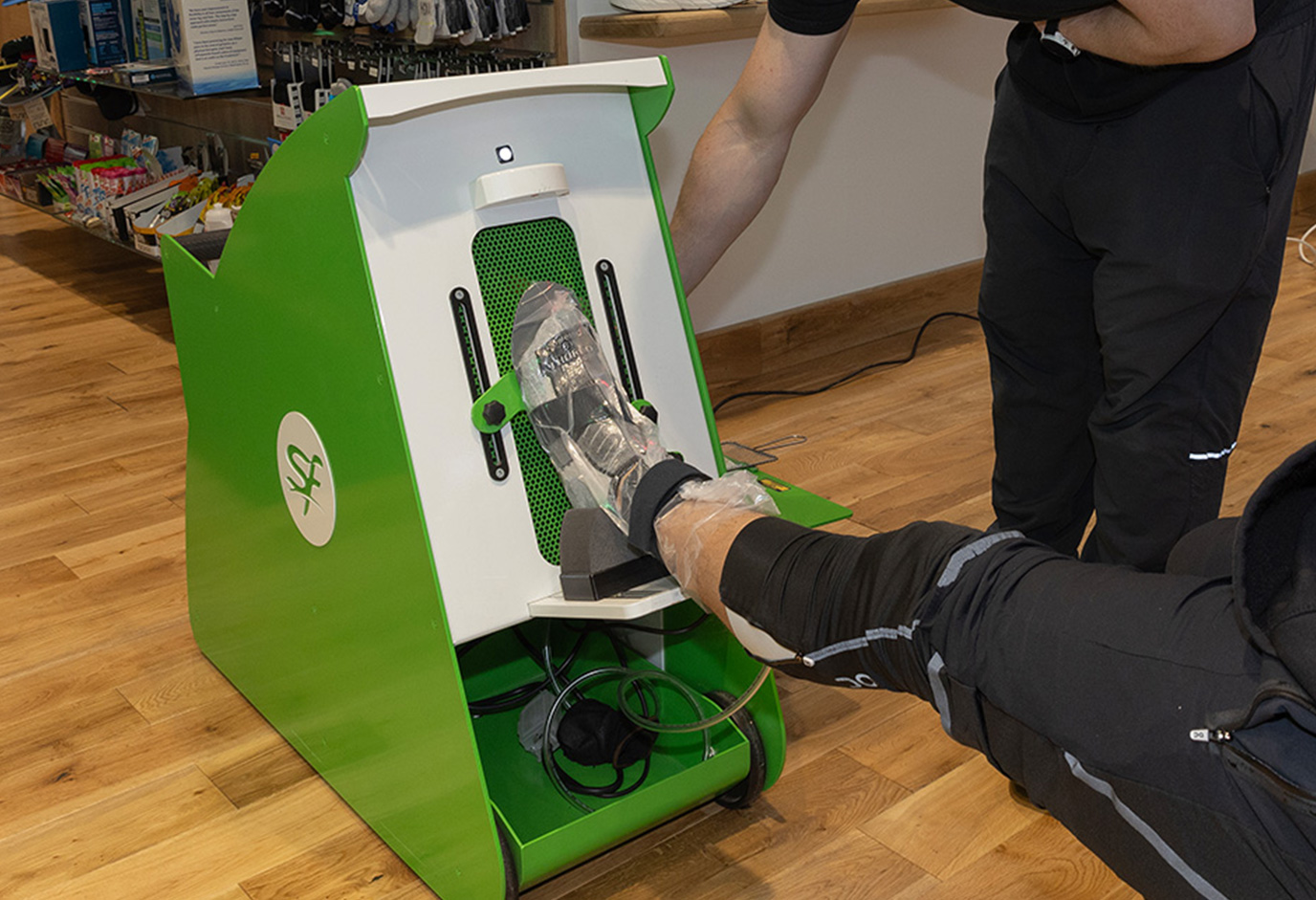
At Alexandra Sports, our gait analysis and biomechanical assessment includes a discussion of your activity and injury history, biomechanical tests, a 3D foot scan, dynamic pressure mapping, treadmill video analysis and footwear testing.
This can help determine whether your current footwear fits correctly and whether a different width, shape, level of cushioning or type of structure feels more suitable.
In some cases, an insole may be worth considering. In others, the most appropriate next step may be advice from a podiatrist or physiotherapist.
Although we can not to promise a cure. Our skills and expertise can certainly reduce guesswork and make footwear recommendations based on the individual rather than a generic label.
Treatment: what can help plantar fasciitis?
Treatment should reflect the severity and duration of symptoms, the person’s activity and the factors that may be contributing.
Adjust aggravating activity
Temporarily reduce or modify activities that consistently worsen the pain. This might mean shorter runs, fewer hills, reduced walking distance, more recovery between sessions or temporarily replacing some impact exercise with lower-impact activity.
Complete rest is not automatically required, but pain that causes limping or changes the way you move should not simply be ignored.
Stretching and strengthening
The 2023 clinical practice guideline for plantar heel pain recommends plantar-fascia-specific and calf stretching to improve pain and function. It also recommends resistance training for the muscles of the foot and ankle.
Strength work needs to be progressed appropriately.
In a randomised trial involving 48 people, high-load progressive strength training produced greater self-reported improvement after three months than plantar-fascia-specific stretching. Both groups also used shoe inserts, and the difference was no longer significant after six or twelve months.
This does not mean everyone should immediately begin heavy foot or calf exercises. Exercise selection should reflect the individual’s symptoms, strength and current capacity. Talk to a local physiotherapist to determine which exercises would benefit you most.
Review footwear
Wearing the wrong footwear is a common factor with Plantar Fasciitis.
Check that your footwear fits securely, provides enough width and is suitable for the activity. Consider whether the cushioning has deteriorated or whether symptoms began after a major footwear change.
The most suitable shoe is not necessarily the softest or most supportive model. Fit, comfort and how the shoe feels during movement remain important.
Can custom insoles or orthotics help?
Insoles and orthotics can alter how the foot sits inside a shoe, improve comfort and redistribute pressure. They should not, however, be presented as a guaranteed cure.
The 2023 clinical guideline advises that prefabricated or custom orthoses should not be used as an isolated short-term treatment. They may be considered alongside approaches such as education, stretching, strengthening, load management and appropriate footwear.
An off-the-shelf insole may provide enough cushioning or structure for some people. Others may benefit from a more personalised option, particularly where the feet differ significantly or standard products do not fit correctly.
Alexandra Sports’ custom insole fitting service includes trim-to-fit, heat-moulded and 3D-printed options.
Heat-moulded insoles are warmed and shaped around the individual foot. The ME3D service uses foot scanning, sizing and pressure data to produce separate 3D-printed insoles matched to the profiles of the left and right feet.
Greater customisation does not automatically make an insole the correct choice. Assessment should come before the product, and persistent or complex symptoms may require a clinically prescribed orthotic from a qualified podiatrist.
You can also read what a difference an insole can make.
Can plantar fasciitis be prevented?
No method can guarantee prevention, and research has not established one universal programme that stops plantar fasciitis from developing.
You may, however, be able to reduce avoidable stress by:
- Increasing running or walking volume gradually
- Allowing enough recovery after harder activity
- Building foot, calf and lower-leg strength
- Avoiding sudden, major changes in footwear
- Replacing heavily worn shoes
- Using footwear that fits and suits the activity
- Responding early when recurring heel discomfort appears
The aim is not to remove all load from the plantar fascia. Healthy tissue needs appropriate load. The goal is to increase demand at a rate the body can adapt to.
Take the guesswork out of your next step
Plantar fasciitis is rarely caused by one shoe, one foot shape or one movement. It may involve a combination of activity changes, tissue capacity, mobility, biomechanics and footwear.
A gait analysis cannot promise to cure plantar fasciitis, but it can help you understand how you move, how pressure is distributed beneath your feet and whether your current footwear is suitable.
If recurring heel or arch discomfort is affecting your running, walking or everyday activity, learn more about our gait analysis and biomechanical assessment, explore our custom insole fitting service, or book an appointment.
This article is intended for general information and does not constitute medical diagnosis or individual treatment advice.
References and further reading
- Buchanan BK, Sina RE and Kushner D. Plantar Fasciitis. StatPearls.
- Plesek J et al. Running Distance and Biomechanical Risk Factors for Plantar Fasciitis: A One-Year Prospective Cohort Study.
- Yoo SD et al. Biomechanical Parameters in Plantar Fasciitis Measured by Gait Analysis System With Pressure Sensor.
- Cheung RTH et al. Intrinsic Foot Muscle Volume in Experienced Runners With and Without Chronic Plantar Fasciitis.
- Koc TA et al. Heel Pain—Plantar Fasciitis: Revision 2023 Clinical Practice Guideline.
- Rathleff MS et al. High-Load Strength Training Improves Outcome in Patients With Plantar Fasciitis.
