


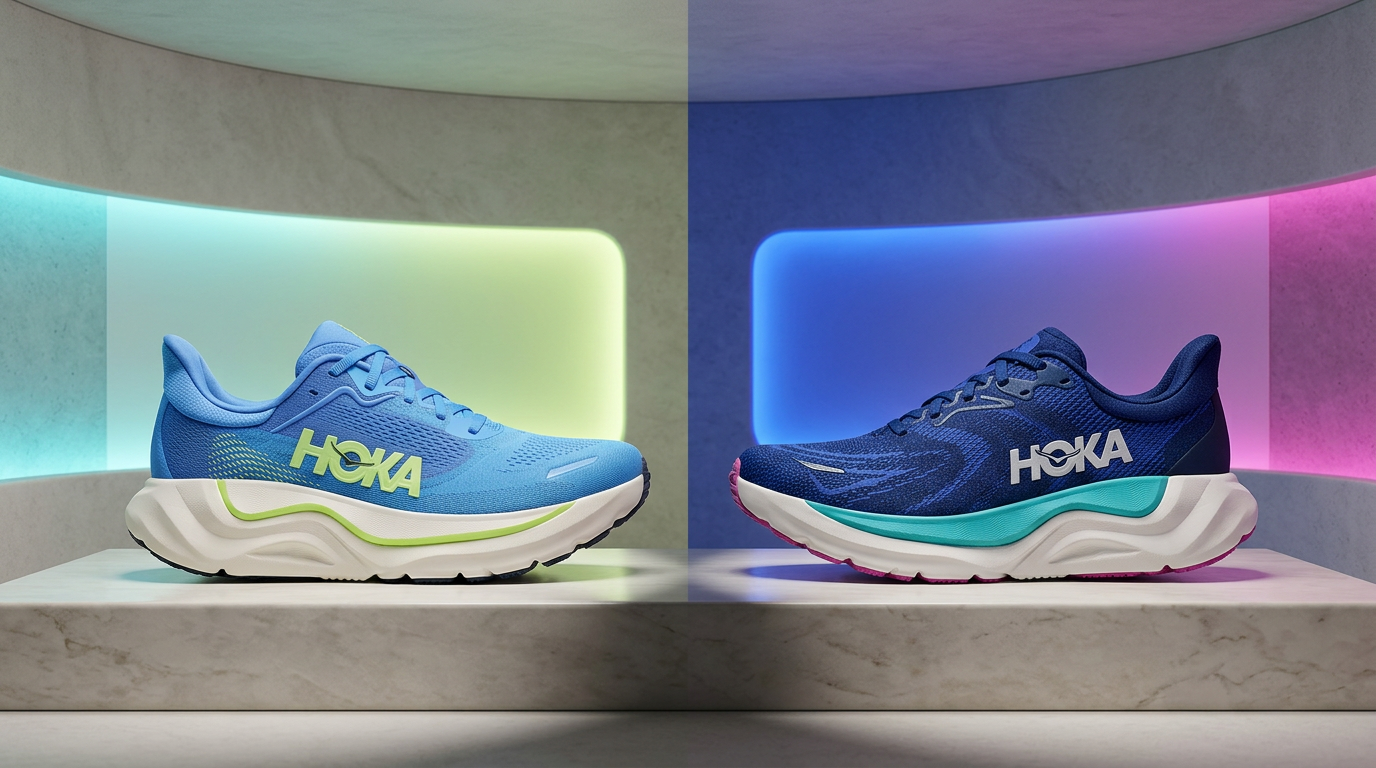
The Hoka Arahi has been one of our best-selling running shoes for years, and it’s easy to see why. It gives you Hoka’s trademark cushioning with stability built in, without the stiff, corrective feel of older support shoes.
Now the Arahi 9 has arrived to replace the Arahi 8. With the 8 now discontinued, the question for most runners isn’t which one to buy. It’s whether the new version still feels like the shoe they know and love.
Let’s break down exactly what’s changed, put the specs side by side and explain who the Arahi 9 suits best. If you’re already sold, you can browse the full Hoka Arahi 9 collection or explore the rest of our Hoka range.
What’s new in the Hoka Arahi 9?
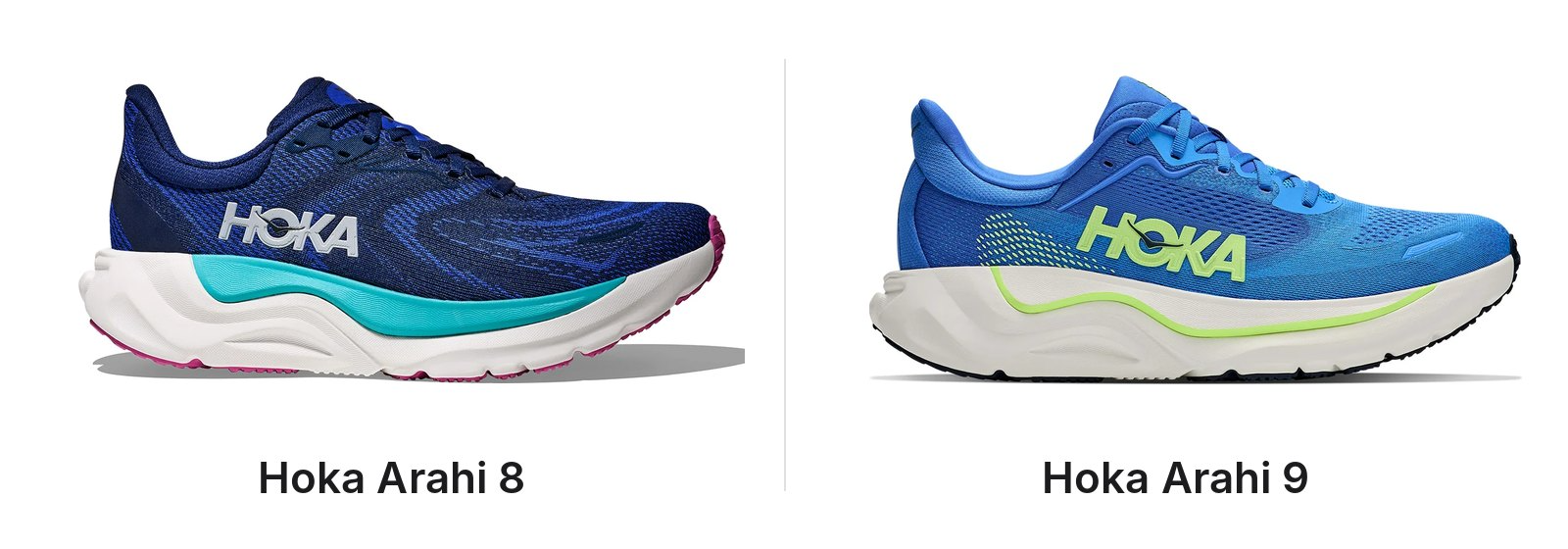
The Arahi 9 is a refinement rather than a reinvention. Hoka has kept the platform that made the Arahi 8 so popular and focused the changes on the upper, the feel underfoot and the grip.
A new, more breathable upper
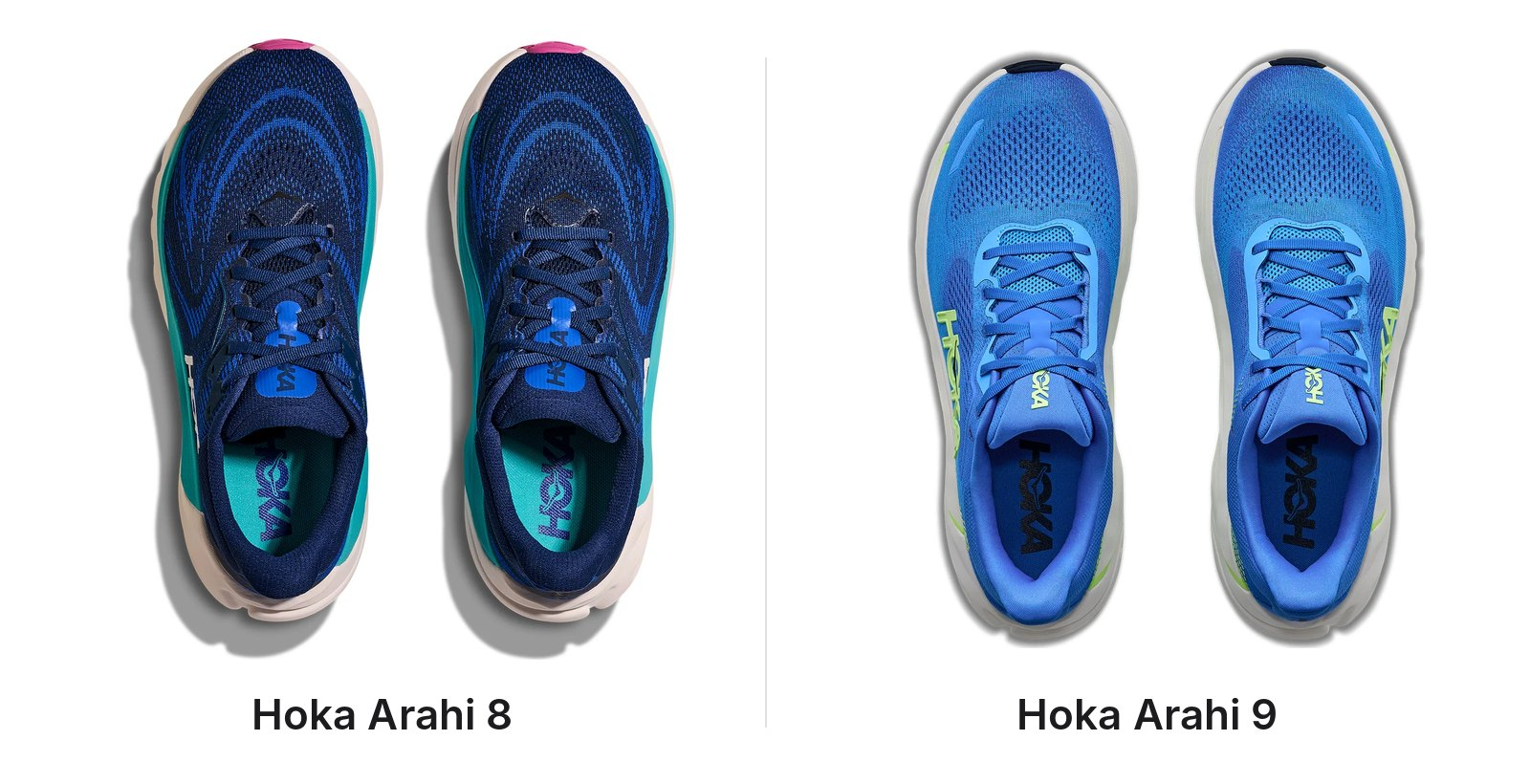
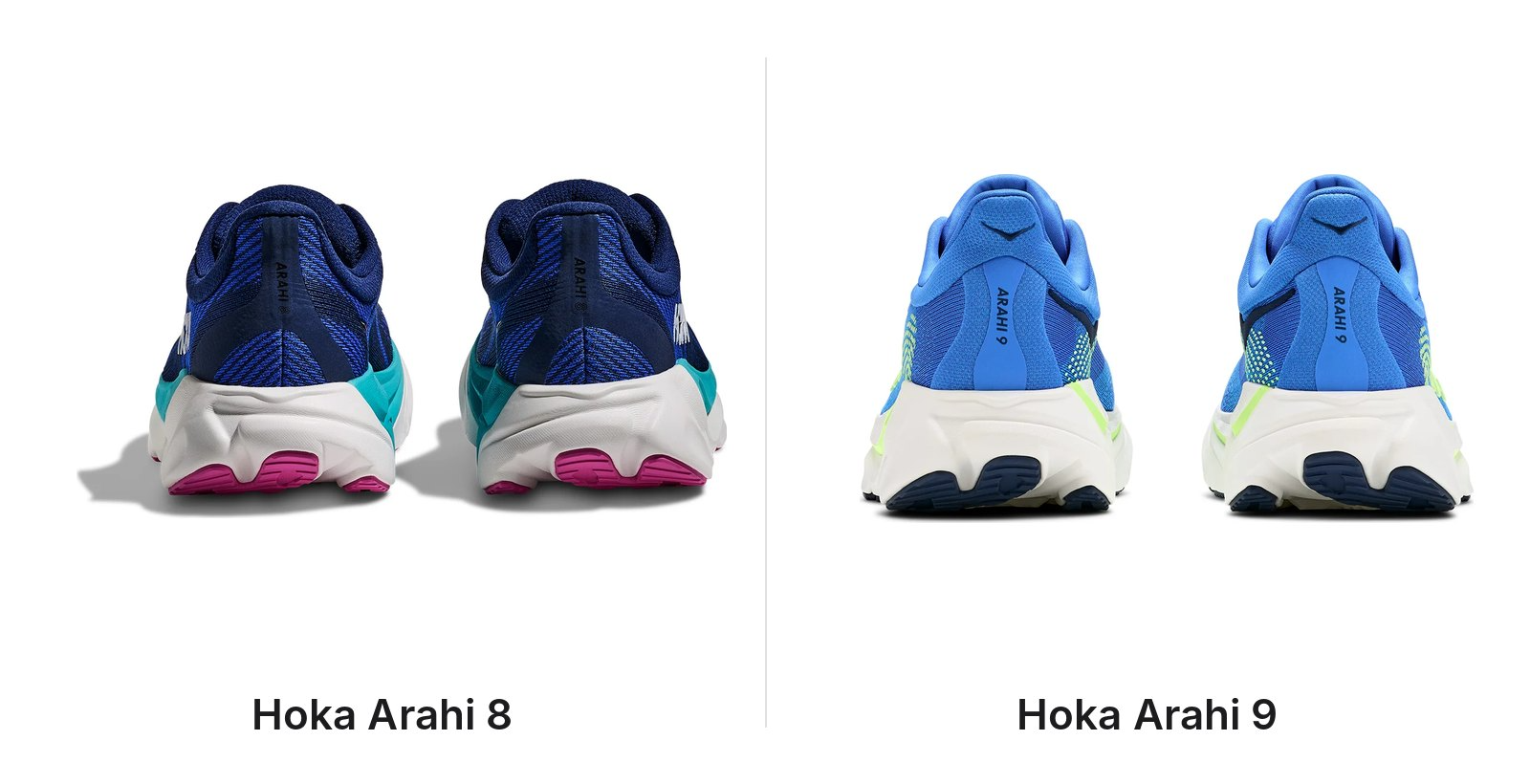
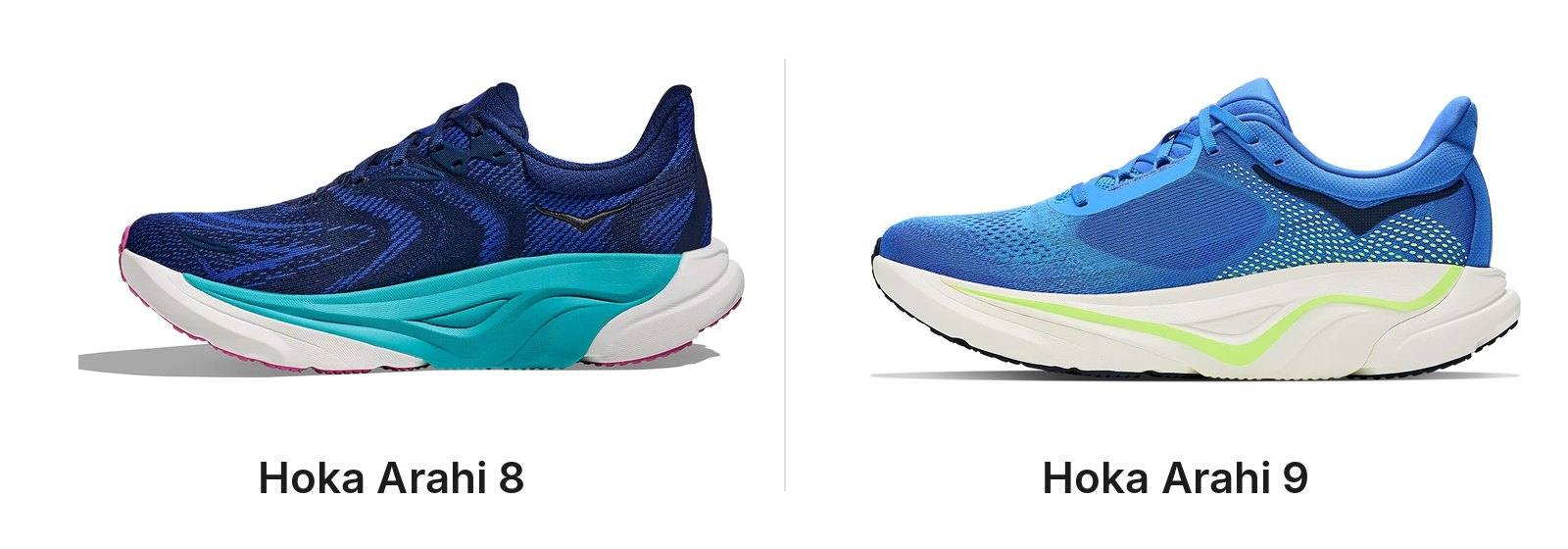
The biggest change is up top. The Arahi 8’s double jacquard mesh has been replaced with a lighter engineered mesh that lets far more air through. You’ll notice it on warmer runs and long days on your feet.
The weave is tighter along the inside (medial) edge of the foot, so the upper adds a little extra support exactly where overpronators need it. A reworked collar and an extended heel pull tab finish things off.
More give in the fit
The new mesh has more stretch, so the forefoot and midfoot feel less restrictive than before. The Arahi 9 also sits on the widest base of any Arahi yet, which adds to that planted, secure feeling.
That said, Hoka’s toe box still tapers towards the front. If you have broad or square-shaped feet, it’s worth trying the Arahi 9 on before committing. It’s available in regular, wide and extra-wide fittings.
A slightly softer ride
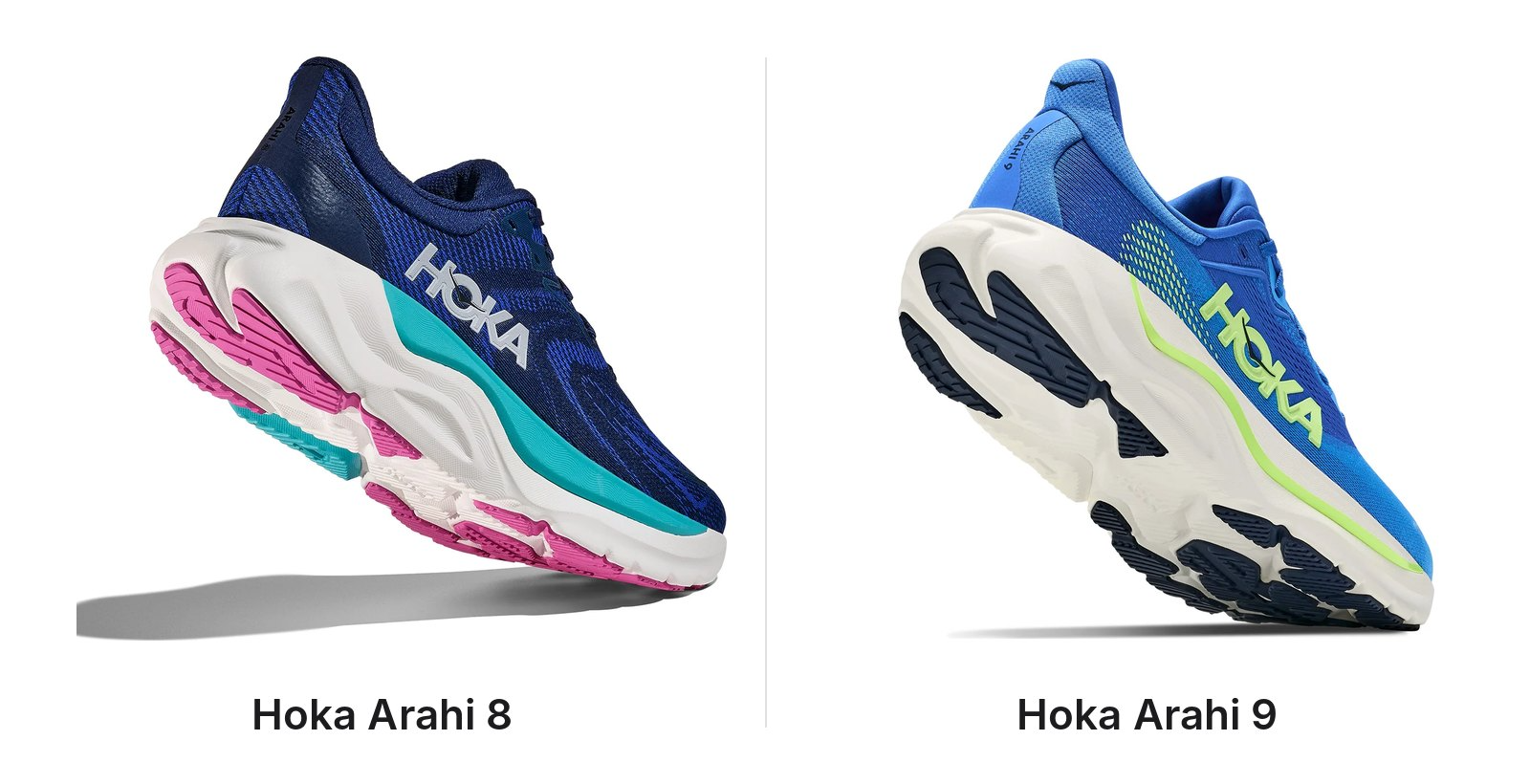
Underfoot, Hoka has softened the H-Frame stability system a touch. Landings feel a little more forgiving, especially in the later miles of a long run, but the shoe hasn’t lost its stable, composed character.
The forefoot is also more flexible than the Arahi 8’s, and the Meta-Rocker now kicks in slightly later. The result is a smooth, natural roll through each stride.
Better grip on wet roads
The outsole layout looks the same, but the rubber now grips noticeably better on wet tarmac. For anyone running through a British autumn and winter, that’s a very welcome upgrade. It’s also hard-wearing, so you can expect plenty of miles from each pair.
A little more weight
The one trade-off is weight. The men’s Arahi 9 comes in at 284g against 278g for the Arahi 8, and the women’s at 232g against 218g. It’s still light for a stability shoe with this much cushioning, but you may notice the difference if you’re coming straight from the 8.
What hasn’t changed
- 8mm heel-to-toe drop
- 39mm heel and 31mm forefoot stack height (men’s)
- H-Frame stability and Meta-Rocker geometry
- Compression-moulded EVA midsole
- The price: still £140
Hoka Arahi 8 vs Arahi 9: side by side
Here’s how the two versions compare on paper. Weights are Hoka’s figures for a standard men’s and women’s size.
| Hoka Arahi 8 | Hoka Arahi 9 | |
|---|---|---|
| Support | Stability | Stability |
| Stability system | H-Frame | Enhanced H-Frame, slightly softer |
| Midsole | Compression-moulded EVA | Compression-moulded EVA, softer feel |
| Heel-to-toe drop | 8mm | 8mm |
| Stack height (men’s) | 39mm heel / 31mm forefoot | 39mm heel / 31mm forefoot |
| Weight (men’s) | 278g | 284g |
| Weight (women’s) | 218g | 232g |
| Upper | Double jacquard mesh | Engineered mesh, tighter medial weave |
| Outsole | Rubber pods with exposed foam | Same layout, grippier rubber |
| Terrain | Road | Road |
| Price | £140 RRP | £140 |
Running in the Hoka Arahi 9
Fit and feel
The Arahi 9 fits true to size, so stick with your usual Arahi size. The step-in feel is more relaxed than the 8, with a well-padded tongue and a secure hold through the midfoot and heel.
One small tip: the tongue isn’t gusseted (stitched to the sides of the upper), so take a second to set it straight when you lace up. Once it’s in place, it stays put.
Stability and ride
The H-Frame is what sets the Arahi apart from more traditional stability shoes. Rather than a hard post under the arch, firmer foam is shaped into an open H that supports both the inside and outside of the foot.
The result is guidance that keeps your foot tracking well without ever feeling like it’s forcing your stride. The shoe is also surprisingly flexible for a stability trainer, and the heel counter is moderate rather than rigid, which is kinder to sensitive Achilles tendons.
This is a comfort-first ride. The Arahi 9 is at its best on easy runs, long runs and recovery days, where the cushioning and rocker do a lot of the work for you. It isn’t built for speed, so if you want something livelier for tempo sessions, pair it with a faster shoe in your rotation.
Who is the Arahi 9 for?
- Runners with mild to moderate overpronation who want support that doesn’t feel intrusive
- Heel strikers, thanks to the 8mm drop and smooth rocker
- Anyone building mileage for a half or full marathon who wants a dependable daily trainer
- Walkers and people on their feet all day, who’ll appreciate the cushioning, stability and breathable upper
- Runners who found the Arahi 8 upper a little too snug or too warm
If the Arahi 9 doesn’t sound quite right for you, we’ve rounded up the best alternatives further down, including the Hoka Clifton Pro.
Should Arahi 8 runners make the switch?
For most Arahi 8 fans, the answer is yes. The Arahi 8 has now sold out with us, and only a final pair or two remains in our Arahi 8 collection.
The good news is that the Arahi 9 keeps everything that made the 8 a favourite: the same drop, the same stack height, the same stable platform and the same price. On top of that, you get a cooler upper with more give, a slightly softer and more flexible ride, and better grip in the wet.
The only thing to be aware of is the small weight gain. Most runners won’t notice it once they’re out on the road.
Alternatives to the Arahi 9
The Arahi 9 suits a lot of runners, but it isn’t the only option. Here’s how it compares with some of the other popular options in our range.
Hoka Arahi 9 vs Hoka Clifton Pro
The Clifton Pro is one of Hoka’s newest shoes, and at £150 it sits right alongside the Arahi 9. The key difference is that the Clifton Pro is a neutral shoe. It has no H-Frame or dedicated stability system, although its wide base and Hoka’s Active Foot Frame (the midsole cradles your foot like a bucket seat) give it a naturally steady feel.
Where the Clifton Pro stands out is the ride. Its supercritical PROGLIDE+ foam is livelier than the Arahi’s compression-moulded EVA, and a more pronounced Meta-Rocker makes it feel quicker when you pick up the pace. It also has a gusseted tongue and plenty of outsole rubber for durability.
| Hoka Arahi 9 | Hoka Clifton Pro | |
|---|---|---|
| Support | Stability | Neutral |
| How it supports you | H-Frame guides both sides of the foot | Wide base and Active Foot Frame |
| Midsole | Compression-moulded EVA | Supercritical PROGLIDE+ foam |
| Ride | Smooth, steady, comfort-first | Softer and more energetic |
| Heel-to-toe drop | 8mm | 8mm |
| Widths | Regular, wide, extra-wide | Regular |
| Best for | Easy miles, long runs, walking | Daily miles with some faster running |
| Price | £140 | £150 |
Choose the Arahi 9 if your feet roll inwards, you’ve been recommended a stability shoe, or you need a wider fitting. Choose the Clifton Pro if you have a neutral gait and want one cushioned shoe that can handle easy runs, long runs and the odd faster session.
More stability shoes to consider
If you like the idea of a supportive daily trainer but want a different feel underfoot, these are the closest alternatives in our range.
| Shoe | Stability system | Drop | Feel | Price |
|---|---|---|---|---|
| Hoka Gaviota 6 | Enhanced H-Frame | 6mm | Maximum cushion, maximum support | £160 |
| Brooks Adrenaline GTS 25 | GuideRails | 10mm | Soft, nitrogen-infused DNA LOFT v3 | £145 |
| Mizuno Wave Inspire 22 | Wave Plate | 10mm | Springy, nitrogen-infused ENERZY NXT | £140 |
| Saucony Guide 19 | CenterPath | 6mm | Soft PWRRUN with a gentle rocker | £140 |
- Hoka Gaviota 6: the Arahi’s big sibling. It uses the same H-Frame idea with more foam and more support, so it’s ideal if you need extra stability or want maximum protection on long runs.
- Brooks Adrenaline GTS 25: a long-time favourite at Alexandra Sports. GuideRails act like bumpers for your knees, only stepping in when your stride starts to drift, and the 10mm drop suits heel strikers.
- Mizuno Wave Inspire 22: the most responsive shoe in this group. Mizuno’s Wave Plate adds firm, dependable support, while the nitrogen-infused foam gives it more bounce than the Arahi.
- Saucony Guide 19: the lowest drop here at 6mm, with a soft, cushioned ride and a broad, stable base. A good choice if you find the Arahi a little firm.
The verdict
The Hoka Arahi 9 is a smart, careful update to one of the most popular stability shoes around. Hoka hasn’t changed what works. Instead, it has improved the things you notice every day: a more breathable upper, a fit with more give, a slightly softer ride and better grip on wet roads.
At £140, it’s a dependable daily trainer for anyone who needs a little support, whether you’re new to the Arahi or replacing a well-worn pair of 8s.
Not sure whether a stability shoe is right for you? Book a gait analysis at our Portsmouth or Christchurch store, and our team will look at how you run and help you find the shoe that suits your stride. Already know the Arahi is for you? Shop the Hoka Arahi 9 collection now.
